Soil Science Ch 2. Soil Physical Properties
Physical properties determine how water moves through the soil, how roots grow, and how tillage implements behave. They are the most visible characteristics of soil and, importantly, the hardest to permanently change through agricultural management.
2.1 Soil Texture
A. Definition and Concept
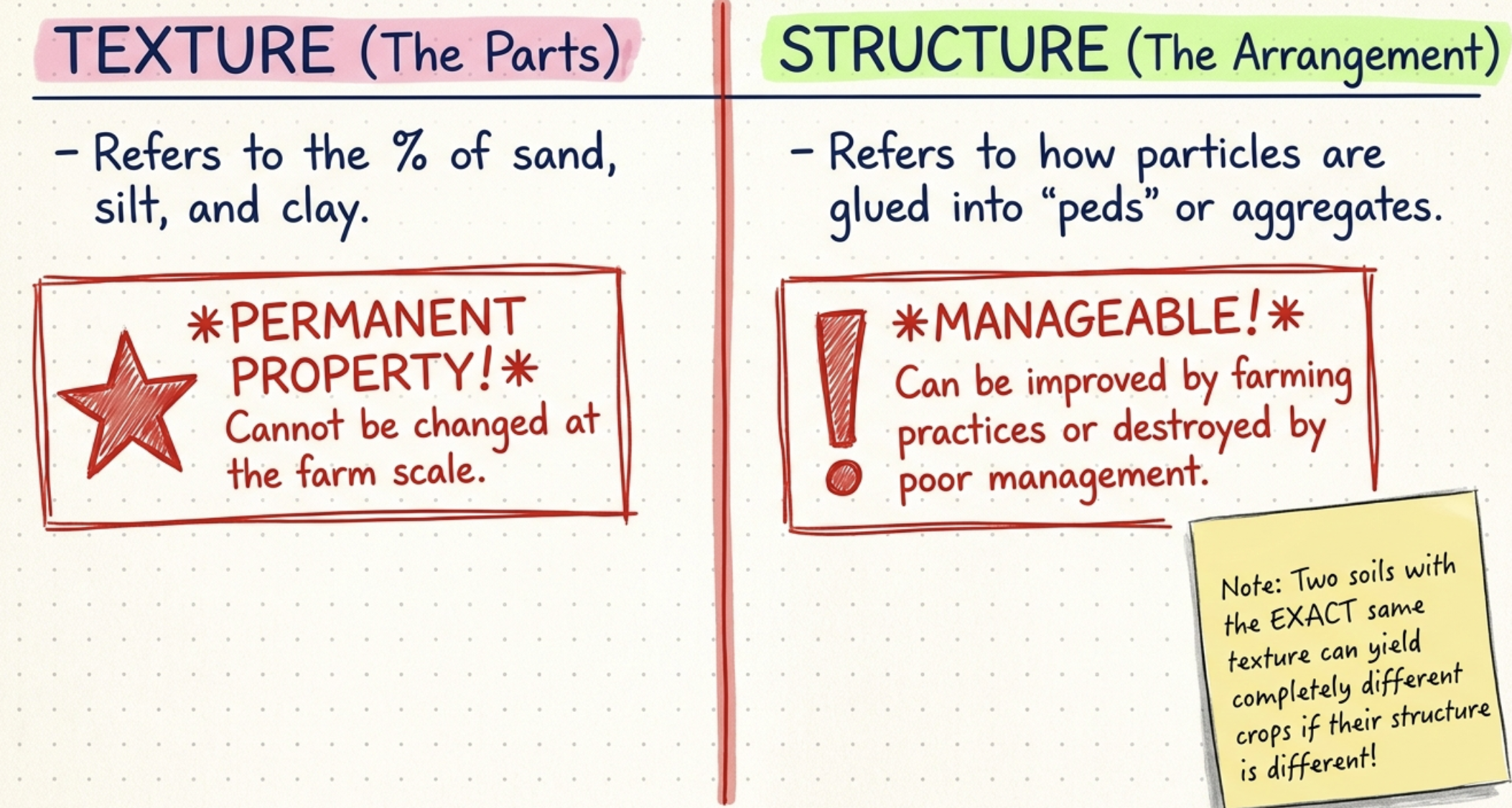
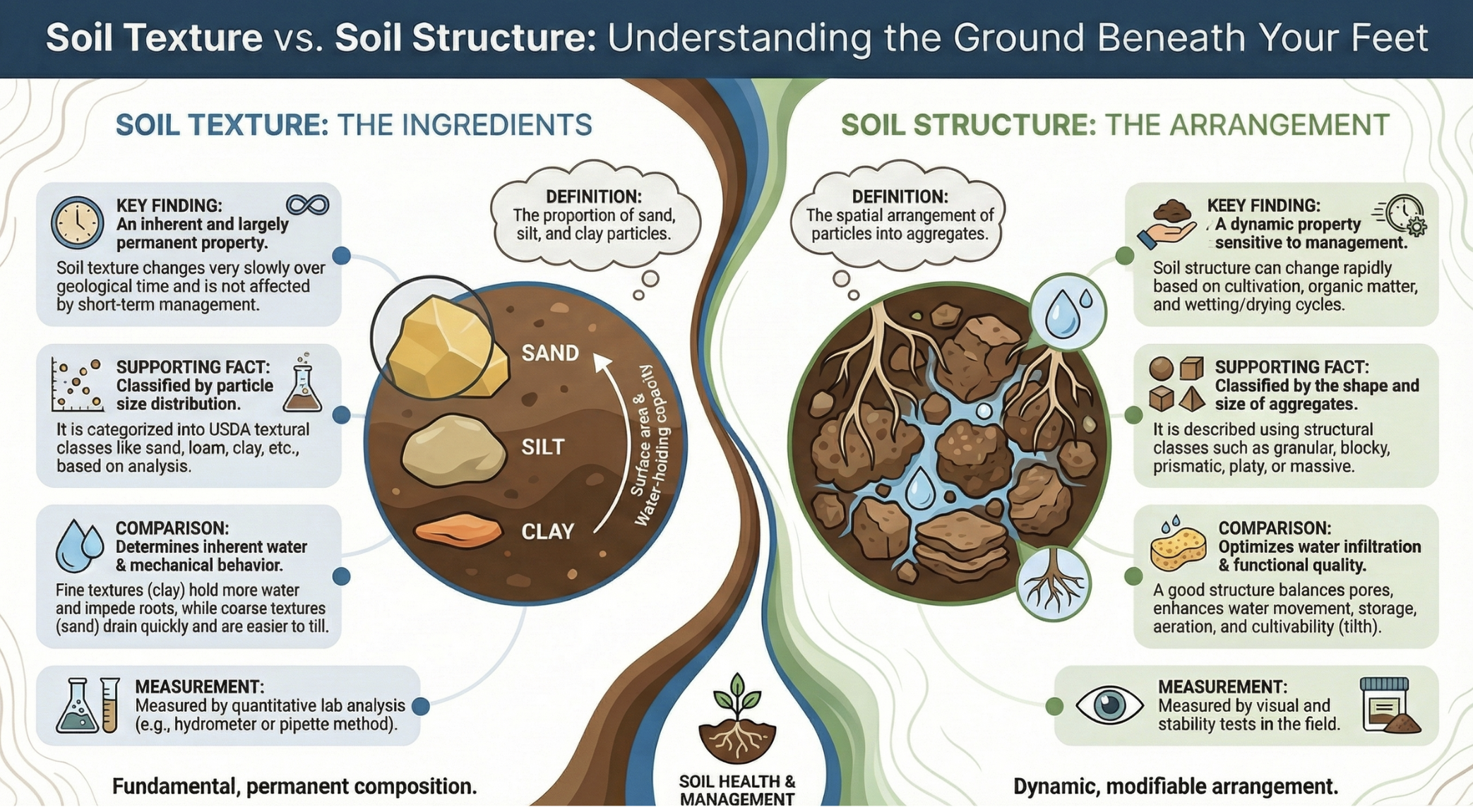
Soil texture refers to the relative proportion, by weight, of sand, silt, and clay-sized particles in the fine earth fraction of the soil. The fine earth fraction includes all soil particles that can pass through a 2 mm sieve, explicitly excluding gravel (2 to 7.5 cm) and larger stones (greater than 7.5 cm). Texture is considered a permanent soil property; unlike soil structure, texture cannot be meaningfully or practically changed at the farm scale.
The individual particles are characterized as follows:
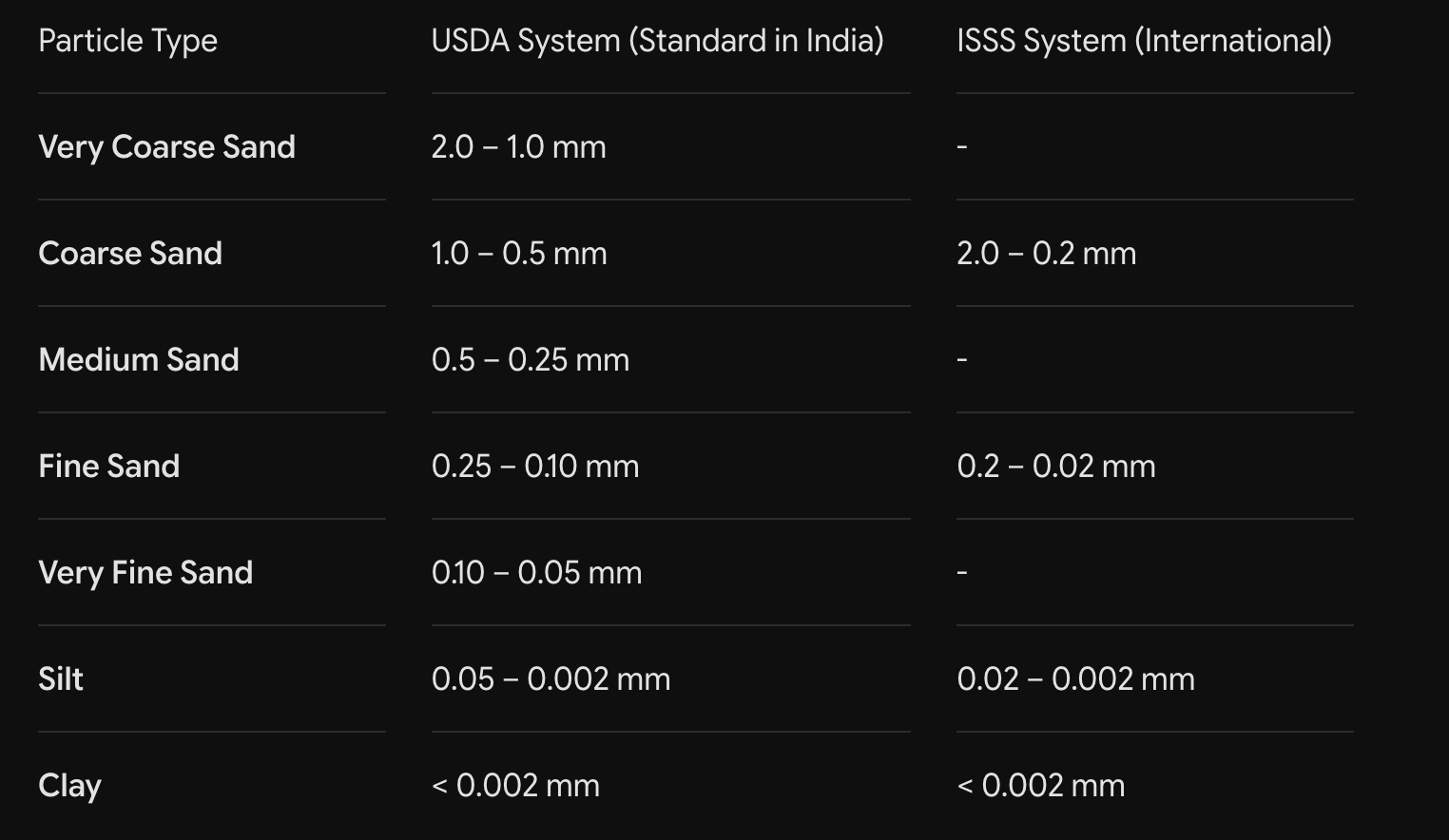
- Sand: Ranging from 0.05 to 2.0 mm (USDA), sand consists of large, coarse particles that give the soil a gritty feel. Sand has high macroporosity, which leads to rapid drainage and excellent aeration, but it suffers from low water retention and a very low cation exchange capacity (CEC).
- Silt: Ranging from 0.002 to 0.05 mm (USDA), silt consists of medium-sized particles that feel smooth or floury. It has moderate water retention and CEC, but it is prone to forming hard crusts when it dries.
- Clay: Measuring less than 0.002 mm (2 μm), clay particles are the smallest. They possess a plate-like crystalline structure and exhibit colloidal properties. Clay has a exceptionally high surface area (5 to 800 m²/g), which results in high water retention and a high CEC. Clay feels sticky and plastic when wet, but becomes exceedingly hard when dry.
B. Particle Size Classification Systems
Different organizations use slightly different sizing standards. The key difference between the USDA and ISSS systems is the size range defined for silt, which can affect soil classification when comparing international studies.
C. Textural Classes
Based on the USDA Textural Triangle, soils are categorized into 12 textural classes.
- Sandy Textures (Sand, Loamy Sand): These are coarse-textured soils with excellent drainage but poor natural fertility. They suffer from low water retention, making them drought-prone, though they are very easy to till.
- Loamy Textures (Sandy Loam, Loam, Silt Loam, Sandy Clay Loam, Clay Loam, Silty Clay Loam): These are medium-textured soils and are generally considered the best for most agricultural crops because they offer balanced properties.
- Clayey Textures (Sandy Clay, Silty Clay, Clay): These fine-textured soils have a high CEC and excellent nutrient retention. However, they suffer from poor drainage, a high risk of waterlogging, and difficult tillage conditions.
The Ideal Texture: A classic "loam" is considered ideal for agriculture. It contains approximately 40% sand, 40% silt, and 20% clay, providing the optimum balance of aeration, drainage, water retention, nutrient holding capacity, and workability.
D. Methods of Texture Determination
- Feel or Ribbon Method (Field): A quick field assessment where moist soil is rubbed between the fingers. Sand feels gritty, silt feels floury, and clay feels sticky and can be pressed into a "ribbon."
- Hydrometer Method (Lab): A mechanical analysis using a Bouyoucos hydrometer. It relies on Stokes' Law, measuring the rate at which particles settle in a suspension (larger particles settle fast, clay settles slowly). Density is measured at specific intervals.
- Pipette Method (Lab): A highly accurate gravimetric method used primarily for research, involving the withdrawal of suspension samples at precisely calculated times and depths.
- Laser Diffractometry: A modern instrumental method that measures particle size based on light scattering. It is the fastest and most precise method, commonly used in advanced laboratories.
E. Effect of Texture on Agricultural Properties
Soil texture directly influences several critical agronomic factors:
- Water Holding Capacity: Clay retains the most water (35–40%), followed by loam (25–30%) and sand (10–15%). Generally, every 1% increase in clay results in a 0.4% increase in water holding capacity.
- Drainage and Aeration: Sand drains rapidly but can leach nutrients, while providing excellent aeration. Clay drains poorly and risks waterlogging, limiting root oxygen. Loam provides the optimal balance.
- Nutrient Retention (CEC): Clay holds significantly more cation nutrients on its exchange sites compared to loam or sand. Consequently, sandy soils require more frequent, smaller applications of fertilizer.
- Tillage Requirement: Sandy soils have a low draft requirement and are easy to till. Clay soils have a high draft requirement because the soil sticks to implements, making seasonal timing critical.
- Erosion Susceptibility: Intermediate textures, such as fine sandy loams, are the most susceptible to water erosion. Sandy soils are prone to wind erosion, while cohesive clay soils are relatively hard to erode.
2.2 Soil Structure
A. Definition and Key Distinction from Texture
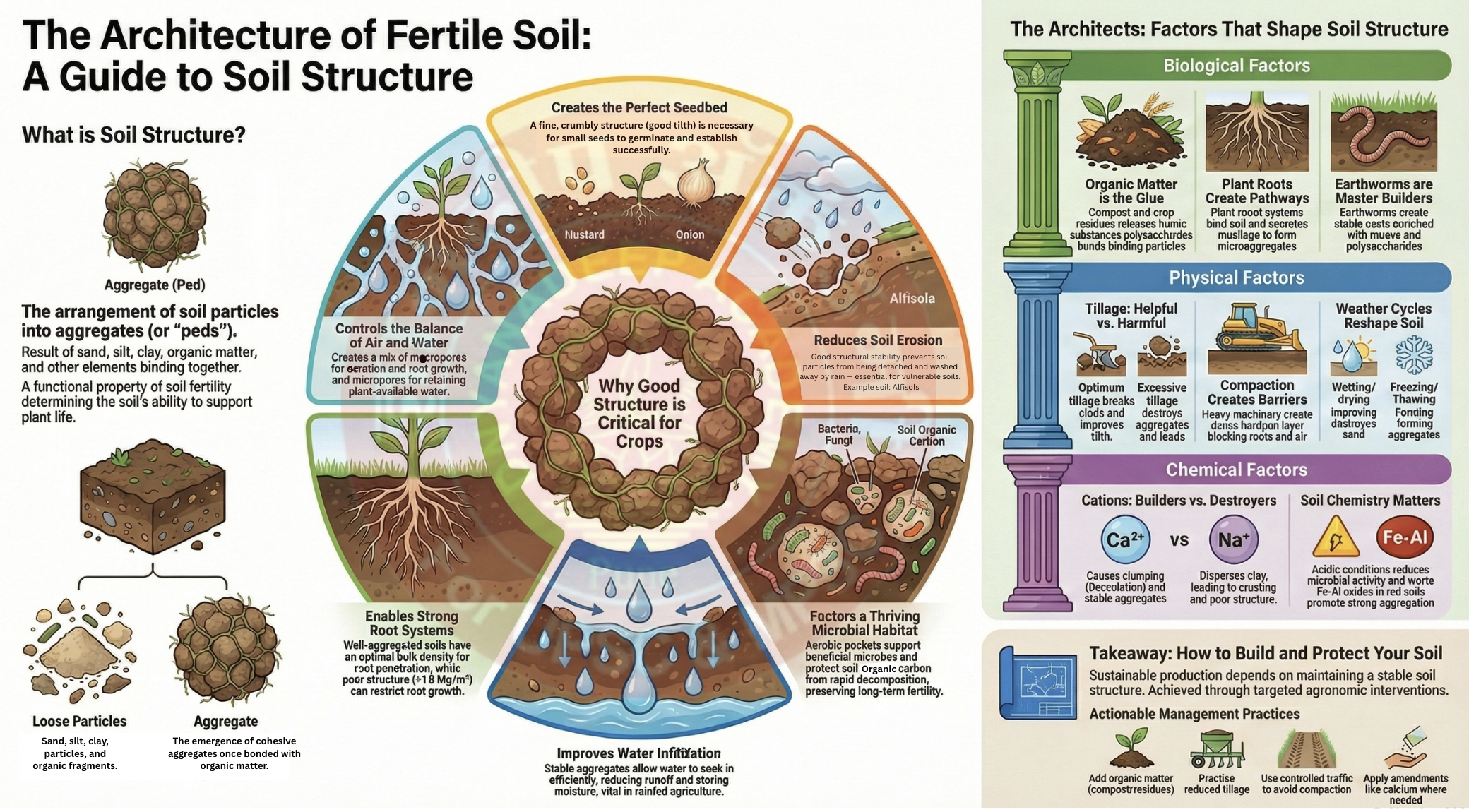
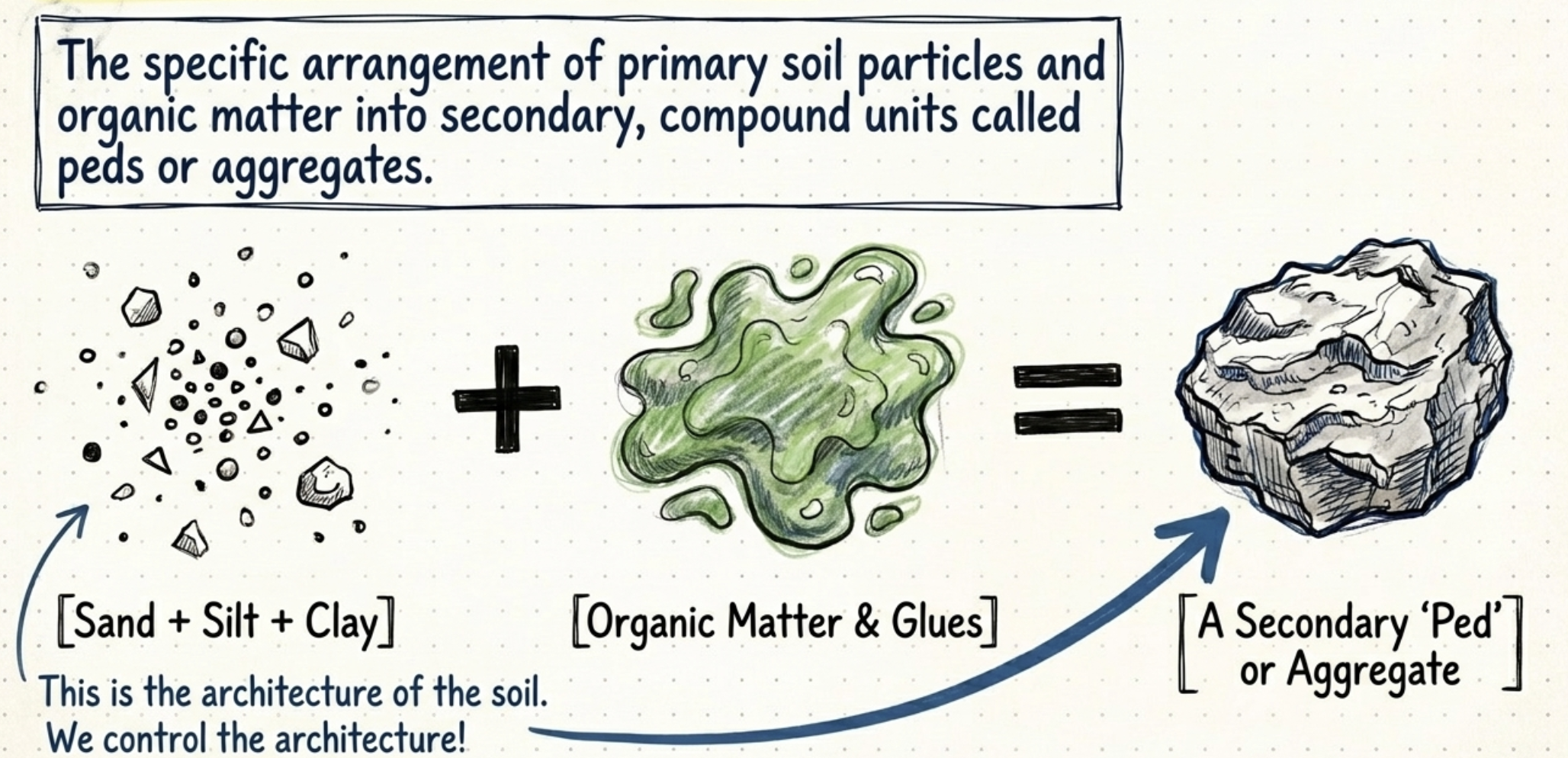
Soil structure is the specific arrangement of primary soil particles (sand, silt, and clay) and organic matter into secondary, compound units called peds or aggregates.
Critical Distinction: While texture refers strictly to the percentage of individual particle sizes, structure refers to how those particles are glued and grouped together. This is a manageable property; unlike texture, a soil's structure can be drastically improved by organic matter and conservation practices, or destroyed by poor management. Two soils with identical textures can yield completely different crop results due to differing structures.
B. Types of Soil Structure
Different structural shapes have diagnostic significance for crop potential:
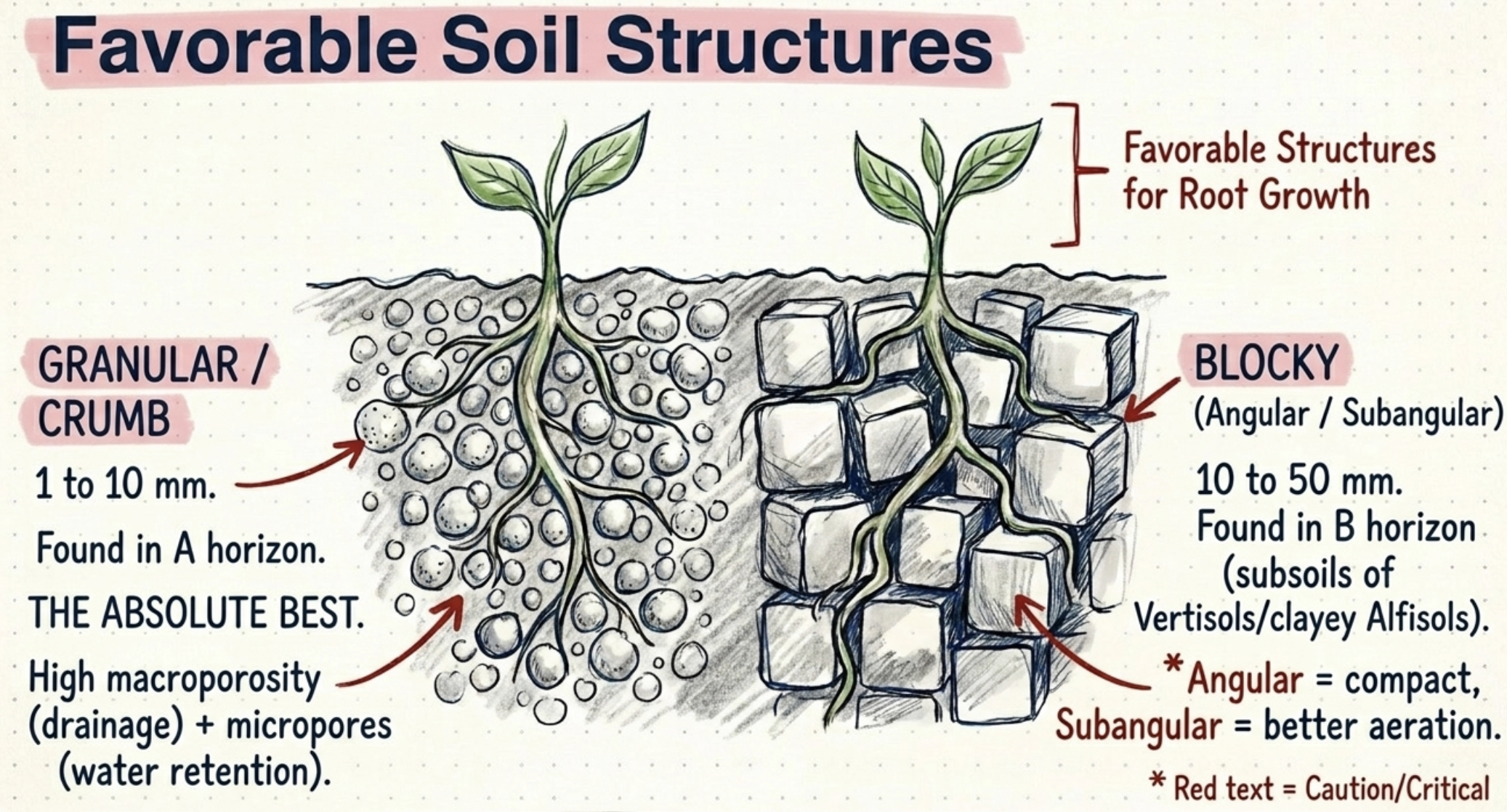
- Granular or Crumb: These are small, rounded, and soft aggregates (1 to 10 mm) typically found in the A horizon. This is the absolute best structure for crop production because it offers high inter-aggregate macroporosity and intra-aggregate capillary micropores, leading to excellent root penetration, rapid water infiltration, and good aeration.
- Blocky (Angular / Subangular): These are block-shaped peds (10 to 50 mm) common in B horizons. Angular blocky peds are compact with little pore space, while subangular blocky peds offer better aeration. They are typical in the subsoils of Vertisols and clayey Alfisols.
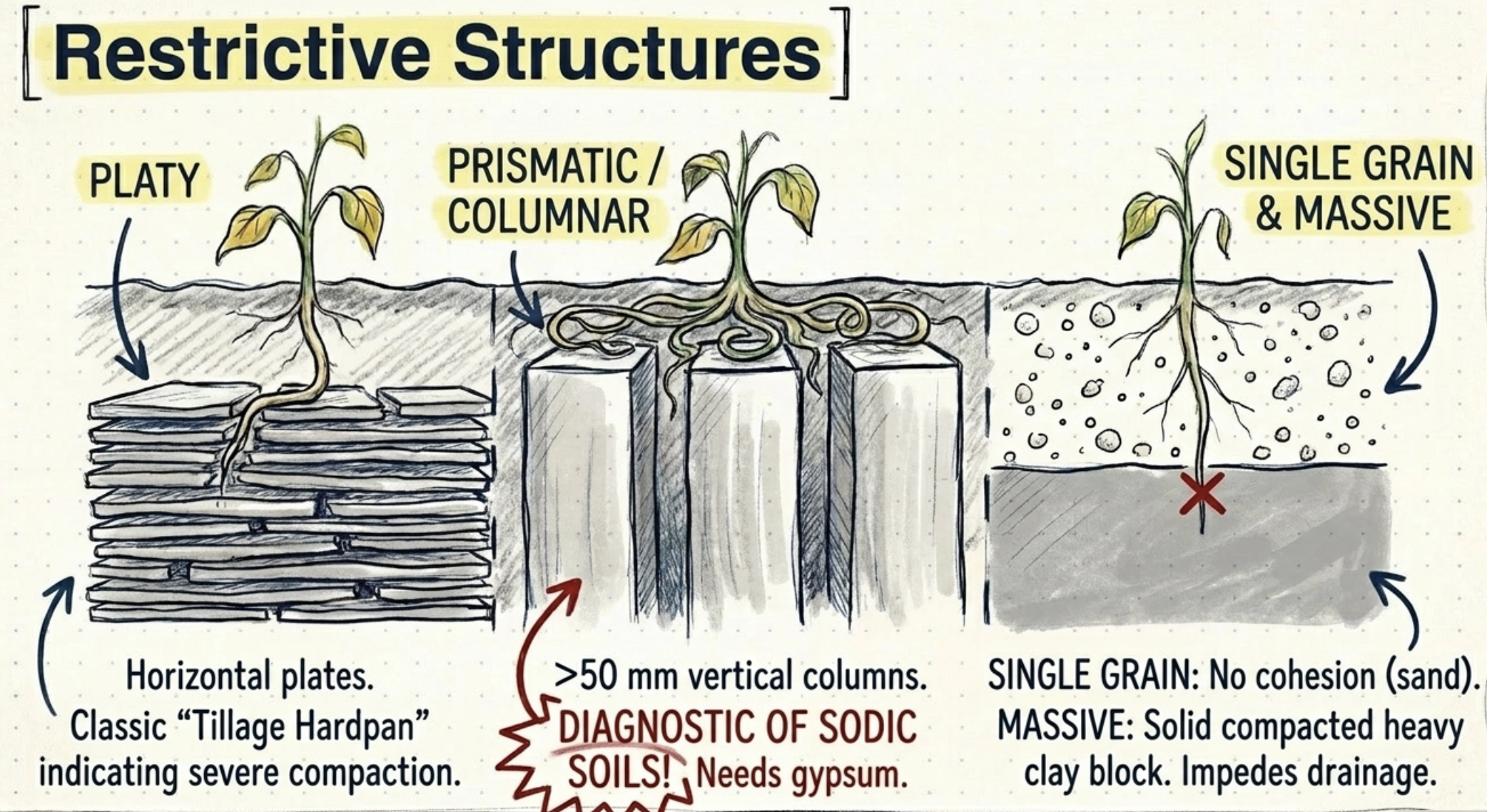
- Platy: Characterized by horizontal, plate-like peds that restrict vertical water movement and root growth. A "tillage hardpan" is a classic example of platy structure, indicating severe compaction where roots are forced to deflect horizontally.
- Prismatic: These are vertical columns with flat tops, usually longer than 50 mm, commonly found in the subsoils of semi-arid and arid regions due to periodic wetting and drying.
- Columnar: Similar to prismatic structure but with rounded tops. This is a diagnostic feature of sodium-dominated (sodic) soils. It creates very poor drainage and is almost impenetrable to roots, usually requiring gypsum for reclamation.
- Single Grain (Structureless): Found in sandy soils where individual particles do not aggregate, separate freely, and lack cohesion.
- Massive: A completely cohesive mass with no visible structure, typical of compacted heavy clays. It severely impedes drainage, aeration, and root growth.
C. Genesis of Soil Structure
Aggregate formation is a complex process requiring biological, physical, and chemical mechanisms to work simultaneously:
- Flocculation: Divalent cations like calcium (Ca²⁺) and magnesium (Mg²⁺) electrically bridge clay particles together into clusters. Conversely, sodium (Na⁺) causes particles to repel and disperse.
- Microaggregate Formation: Bacterial polysaccharides, fungal hyphae, and humic acids bind flocculated clay and silt into microaggregates (less than 250 μm). Glomalin, produced by mycorrhizal fungi, is the most persistent binding agent.
- Macroaggregate Formation: Plant roots and fungal hyphae physically press microaggregates together while exuding biological glues, forming macroaggregates (greater than 250 μm).
- Stabilization: Wetting and drying cycles cement the aggregates together. Iron and aluminum oxides form outer crusts, and organic matter is protected from rapid oxidation within the aggregate core.
- Profile Differentiation: Over many years, biological and pedogenic activity results in distinctly structured soil horizons.
D. Significance of Soil Structure for Crop Production
- Optimal Pore Balance: A well-structured granular soil provides a perfect ratio of macropores for efficient drainage and micropores for necessary water retention.
- Enhanced Root Penetration: Loose aggregation allows plant roots to reach deeper into the subsoil, providing better access to water and conferring drought tolerance.
- Uniform Germination: A fine granular seedbed at the surface ensures excellent soil-to-seed contact, promoting even and reliable sprouting.
- Improved Water Dynamics: Stable aggregates maintain continuous pore channels, which encourages rapid water infiltration and significantly reduces runoff, erosion, and waterlogging.
- Microbial Protection: Aggregates provide safe microsites for beneficial microbes, protecting them from predators while ensuring sustained nutrient cycling and disease suppression.
- Energy Savings: Structurally sound soils reduce the mechanical draft requirement for tillage, which can save 20 to 30% in fuel energy.
E. Factors That Change Soil Structure
Structure Destroyers:
- Tillage: Every pass of a plow breaks apart aggregates. Wet tillage is particularly destructive, as it smears clay and shreds beneficial fungal networks.
- Raindrop Impact: The kinetic energy of large raindrops shatters surface aggregates, leading to surface sealing, crusting, and reduced infiltration.
- Sodium (Na⁺): Sodium electrically disperses clay, completely degrading soil aggregation in sodic soils.
- Heavy Machinery: Compaction increases bulk density, permanently crushing pore spaces until biological activity can recover them.
- Poor Residue Management: Burning crop residues destroys organic binding agents and starves structural microbes.
Structure Builders:
- Organic Matter: Adding farmyard manure, compost, or green manure introduces humic acids and fuels biological glues. This is the single most important management tool for structure.
- Calcium Ions: Applying lime to acidic soils promotes clay flocculation and visibly improves structure.
- Earthworms: Earthworms are nature's physical engineers; they mix soil, secrete binding mucus, and form highly stable casts.
- Mycorrhizal Fungi and Roots: Fungi produce glomalin, while deep-rooted crops (especially legumes like Sesbania) physically create root channels and exude binding agents.
- Cover Crops: Maintaining a living mulch protects surface aggregates from raindrop impact while slowly adding organic matter.
2.3 Soil Consistency & Tillage Timing
A. Definition
Soil consistency refers to the manifestation of the physical forces of cohesion and adhesion between soil particles at varying moisture levels. Practically, consistency determines the workability of the soil, the draft required for ploughing, and the risk of compaction, making it a critical factor in precision farm management.
B. Atterberg Limits
The response of soil to moisture changes is defined by the Atterberg limits:
- Liquid Limit (LL): The maximum water content at which soil behaves like a liquid. Tillage is impossible above this limit because the soil simply runs off the implements.
- Plastic Limit (PL): The minimum water content at which soil can be molded without crumbling. Soil can technically be worked between the PL and LL, but severe structural damage occurs.
- Shrinkage Limit (SL): The water content below which the soil volume no longer changes as it dries. The soil becomes hard and brittle, causing excessive tillage draft.
- Plasticity Index (PI): Calculated as the Liquid Limit minus the Plastic Limit (PI = LL - PL). It represents the width of the workable zone. High-clay soils have a longer workable period but carry a higher risk of structural damage if tilled while wet.
C. Optimal Tillage Moisture — The Friable Range
To protect soil structure, tillage should occur at a moisture content between the shrinkage limit and the plastic limit, known as the friable range. At this moisture level, the soil breaks into clods that naturally crumble into aggregates upon drying.
- Wet Tillage (Above PL): Causes clay smearing, destroys aggregates, and creates tillage pans. This must be avoided.
- Dry Tillage (Below SL): Requires excessive mechanical power, fails to break clods properly, and pulverizes existing aggregates into dust.
- Note on Black Cotton Soils: These high-montmorillonite soils have a very narrow workable range because their liquid and plastic limits are very close together. The only viable window for tillage is a brief period immediately following the monsoon.
2.4 Soil Density, Porosity & Water Constants
A. Particle Density vs Bulk Density
- Particle Density (PD): The mass of dry soil per unit volume of solid particles only, explicitly excluding all pore spaces. For most mineral soils dominated by quartz, the PD is approximately 2.65 g/cm³. Soils with high organic matter have a lower PD (1.2 to 2.0 g/cm³) because organic matter is very light.
- Bulk Density (BD): The mass of oven-dry soil per unit of total volume, which includes both solids and pore spaces. This is a vital parameter for agricultural management.
- Sandy soils: 1.6 to 1.8 g/cm³ (densely packed with heavy minerals).
- Loam soils: 1.2 to 1.5 g/cm³ (the ideal agricultural range).
- Clay soils: 1.0 to 1.4 g/cm³ (lighter per volume due to high microporosity).
- Root Restriction: Root growth is severely mechanically restricted when bulk density exceeds 1.8 g/cm³ in sandy soils or 1.4 g/cm³ in clay soils, ultimately leading to yield loss.
B. Total Porosity
Porosity indicates the total volume of pore space in the soil. The formula for calculation is:

For example, if a soil has a BD of 1.3 g/cm³ and a PD of 2.65 g/cm³, the porosity is roughly 50.9%. Typical total porosity ranges from 35–40% for sand, to 45–55% for loam, and up to 50–60% for clay. Ideal agricultural soil consists of 50% solid matter and 50% pore space, with the pores divided equally between air and water at field capacity.
C. Pore Types and Functions
- Macropores (>0.06 mm): These pores drain freely by gravity and facilitate rapid air exchange, which is essential for aerobic root function. They are often formed by earthworms and decaying roots.
- Micropores (0.003–0.06 mm): Found within soil aggregates, these pores retain capillary water against the pull of gravity, supplying moisture to plants between rain or irrigation events.
- Ultramicropores (<0.003 mm): These pores hold hygroscopic water so tightly (greater than 1500 kPa of tension) that plant roots cannot extract it, making the water biologically unavailable.
D. Soil Water Constants
- Saturation (SS): All soil pores are completely filled with water. The soil is waterlogged and anaerobic, which is detrimental to most crops except paddy rice.
- Field Capacity (FC): The optimal moisture state for crops. It is the amount of water retained after gravitational drainage has ceased (usually 24 to 48 hours after rain), held at a tension of –0.03 MPa. Clay holds 35–45% water at FC, loam holds 25–35%, and sand holds 10–15%.
- Permanent Wilting Point (PWP): The minimal moisture state at which plants wilt permanently and cannot recover even if placed in shade. Water is held tightly at –1.5 MPa. Clay reaches PWP at 15–20% moisture, loam at 10–12%, and sand at 4–6%.
- Available Water Capacity (AWC): The most important agronomic water parameter. It is the amount of water actually available to plants, calculated as Field Capacity minus the Permanent Wilting Point (AWC = FC - PWP). While clay holds the highest total volume of water, much of it is held below the PWP; therefore, loam often has an equal or better actual Available Water Capacity (15–20%) than clay.
2.5 Soil Color — Diagnostic Significance
A. Munsell Color System
Soil color is quantified using the Munsell system, which relies on three variables: Hue, Value, and Chroma (e.g., 10YR 3/2 indicates a dark grayish-brown).
- Hue: The dominant wavelength or color family (e.g., R for red, YR for yellow-red).
- Value: The lightness of the soil, ranging from 0 (pure black) to 10 (pure white).
- Chroma: The intensity or purity of the color, ranging from 0 (neutral grey) to 8 (vivid color).
B. Diagnostic Meaning of Soil Colors
- Black or Dark Brown: Indicates high organic matter accumulation. Alternatively, in Deccan plateau soils (black cotton soils), the black color comes from titaniferous magnetite (an iron compound), not organic matter.
- Red or Reddish-Brown: Indicates the presence of well-oxidized ferric iron oxide (hematite). This is a sign of highly weathered, well-drained conditions, typical of Peninsular India.
- Yellow or Brownish-Yellow: Indicates the presence of goethite (hydrated iron oxide), suggesting slightly poorer drainage and higher moisture retention than red soils.
- Grey or Blue-Grey (Gleying): A clear diagnostic indicator of severe waterlogging and anaerobic conditions. Under these conditions, red iron is chemically reduced to grey iron.
- White or Light Grey: Indicates the accumulation of calcium carbonate, silica hardpans, or salts. It is also characteristic of highly leached "E horizons" in desert soils.
- Mottles: Patches of alternating grey and red indicate fluctuating water tables and alternating seasonal waterlogging.
2.6 Soil Temperature — Effects on Crops
A. Factors Affecting Soil Temperature
- Solar Radiation: The primary energy source for soil heating. Darker soils absorb 80–90% of solar radiation, whereas lighter soils absorb only 60–70%.
- Soil Moisture: Water has a high specific heat capacity. Consequently, wet soils heat and cool very slowly, providing thermal stability. Dry soils experience rapid, extreme daily temperature fluctuations.
- Mulching: Surface covers, such as straw or plastic, act as insulators. They can reduce harsh summer soil temperatures by 3 to 8°C and prevent winter heat loss by 2 to 4°C.
- Tillage: Tilling increases the surface area of the soil, causing it to warm much faster in the spring, though it also causes the soil to lose moisture more rapidly.
B. Minimum Soil Temperatures for Germination
Seeds require specific minimum temperatures to break dormancy and germinate:
- Wheat: 4 to 5°C (germination fails below 4°C).
- Maize: Minimum of 10°C (optimal is 25–30°C).
- Soybean: Minimum of 12°C.
- Rice (Paddy): Minimum of 12 to 13°C.
- Vegetables: Most require 15 to 20°C, with warm-season crops like tomatoes and eggplants requiring soils warmer than 18°C.
C. Importance of Soil Temperature
Soil temperature drives fundamental chemical and biological processes. According to the Q10 rule, biological reaction rates (like nitrogen mineralization) double for every 10°C increase, peaking between 30 and 35°C in Indian conditions. Microbial activity ceases near 5°C and denatures above 45°C. Plant root growth is generally optimal between 20 and 25°C; extreme heat causes membrane damage. Finally, high baseline soil temperatures (30–40°C in the summer) are the primary reason tropical Indian soils struggle to accumulate organic matter, as decomposition occurs incredibly fast.
📝 Exam Focus / Past Year Question (PYQ) Hooks
- PYQ 2022 Q4(b) 20M: Why is soil structure important for crop production? How is it changed by various factors? → Combine section 2.2D (Significance) and 2.2E (Factors: Destroyers vs. Builders) for a complete 20-mark answer.
- PYQ 2023 Q1(e) 10M: Genesis of soil structure; significance to crop production. → Combine section 2.2C (Genesis) and 2.2D (Significance) for a solid 10-mark response.
- PYQ 2024 Q4(a) 20M: Conventional vs. conservation tillage — effects on soil properties and GHG. → Synthesize section 2.3C (Tillage timing), 2.4 (Bulk density/porosity impacts), and 2.2E (Structural changes), linking them to the Greenhouse Gas principles from your Chapter 7 notes.