As the global community marks World Environment Day, the conversation has pivoted from "protecting" what is left to "restoring" what has been lost. The United Nations has designated this decade (2021–2030) as the UN Decade on Ecosystem Restoration. But what exactly does this process entail, why is it necessary, and how does it play out on the ground?
What is Ecosystem Restoration?
In standard ecological terms, ecosystem restoration is the process of halting and reversing degradation to regain ecological functionality and improve human well-being.
It is not merely about planting trees. True restoration involves actively assisting the recovery of an ecosystem that has been degraded, damaged, or destroyed. This means repairing the complex web of life: bringing back soil microbiology, restoring water cycles, reintroducing native flora and fauna, and establishing a balance between human agriculture and natural biodiversity.
The ultimate goal is to transition a landscape from a state of vulnerability (where a single drought or pest attack can cause collapse) to a state of resilience.
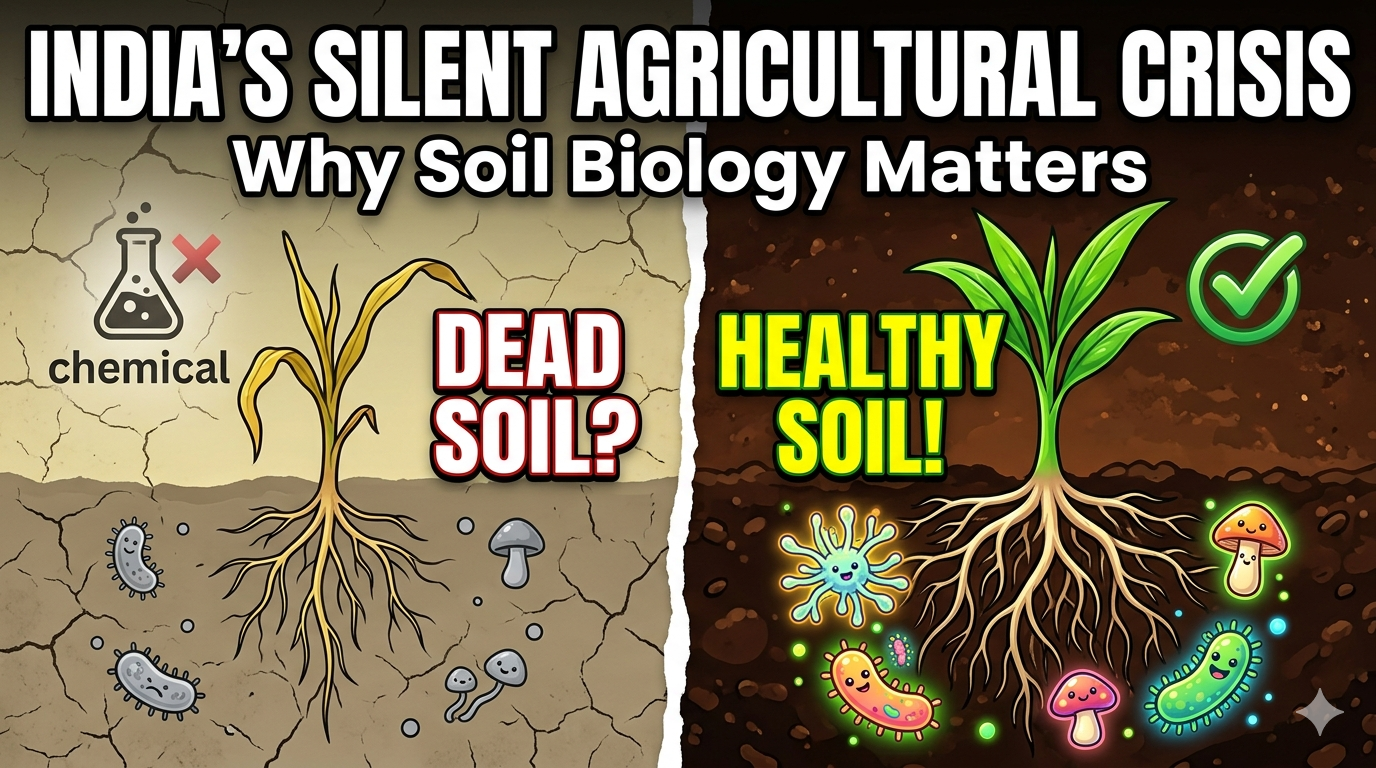
To understand the mechanics of how degradation and restoration occur below the surface, it helps to look at the soil itself
Key insight: While synthetic inputs provide a short-term yield spike, they deplete the soil's organic carbon and microbial life over time, leading to structural collapse.
What is the Issue?
The primary issue driving the need for restoration is the rapid degradation of land, largely fueled by unsustainable agricultural practices.
Historically, farming systems were diverse and integrated with local forests and livestock. However, the push for agricultural modernization over the last few decades promoted a shift toward market-oriented cash crops. This gave rise to "ecological monocropping"—the replacement of diverse, self-sustaining ecosystems with a narrow set of market-driven hybrid crops.
While this approach increases short-term production, the ecological costs are severe:
-
Soil Sterilization: Prolonged use of synthetic fertilizers and chemical pesticides destroys earthworms, microbes, and beneficial insects. The soil loses its porosity, becoming hard, dry, and unable to retain moisture.
-
Water Depletion: Without organic matter to act as a sponge, rainwater runs off instead of seeping into the groundwater table, causing summer water sources to dry up.
-
Loss of Biodiversity: The singular focus on commercial hybrids causes traditional seed varieties to vanish, taking centuries of adapted genetic resilience with them.
How is it being addressed?
Ecosystem restoration is being addressed through a shift back to agroecology—an approach that treats agricultural land as a living, interconnected ecological landscape rather than a factory floor.
Key restoration strategies include:
-
Biomass Recycling: Phasing out chemical fertilizers in favor of homemade compost from livestock dung and crop residues to rebuild soil organic carbon.
-
Mixed Cropping & Intercropping: Planting multiple crops together (like legumes, maize, and root vegetables) to naturally deter pests and ensure soil fertility.
-
Vegetative Barriers: Planting native grasses, bamboo, and trees on slopes to prevent topsoil erosion and manage microclimates.
-
Natural Nitrogen Fixation: Reintroducing specific crops that naturally pull nitrogen from the air and fix it into the soil, reducing the need for synthetic urea.
Case Study: The Khasi Farmers of Meghalaya
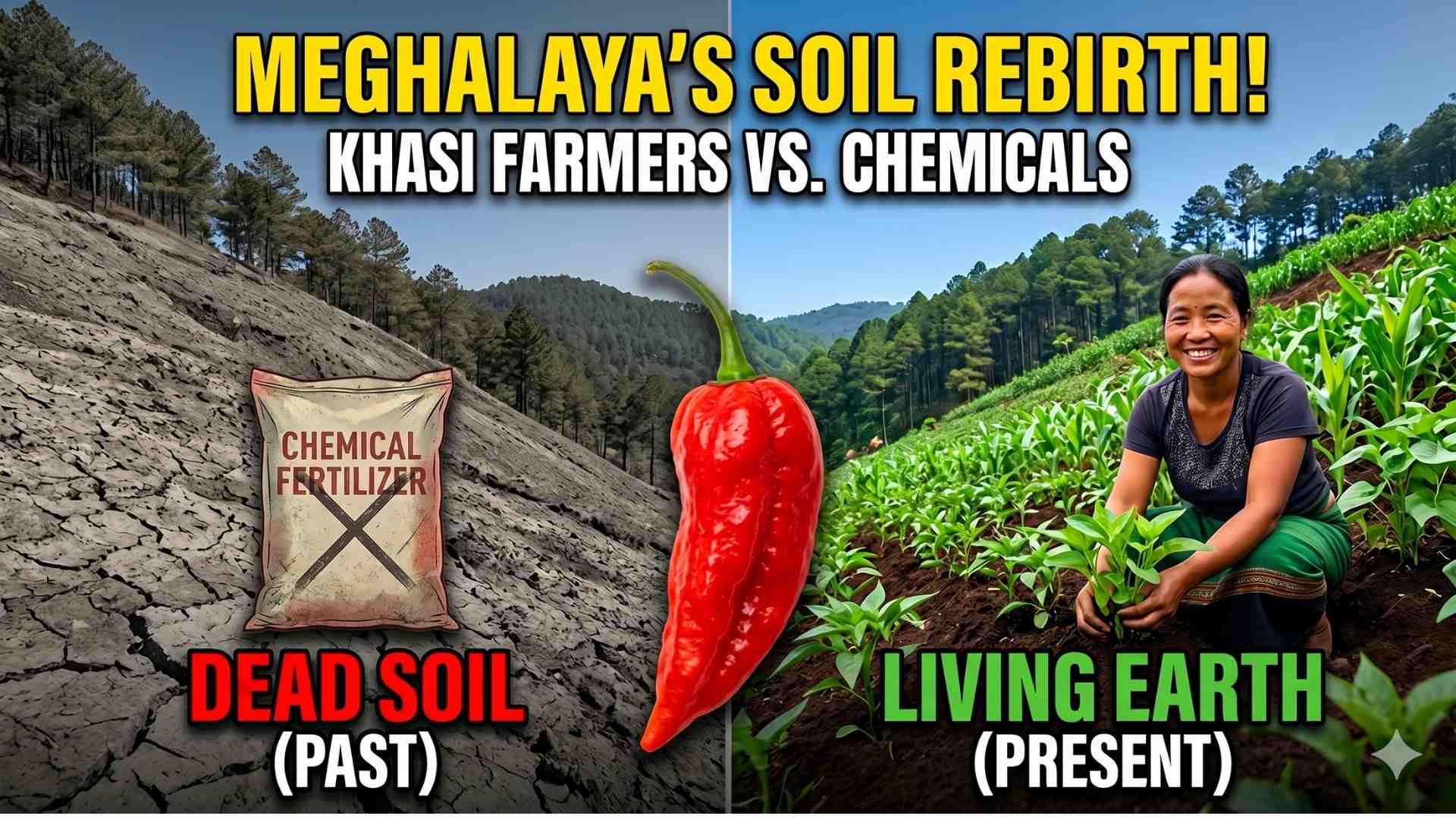
A textbook example of this degradation-to-restoration cycle can be seen in the Eastern West Khasi Hills of Meghalaya.
For generations, Khasi communities practiced jhum (shifting cultivation), growing a rich mix of crops that maintained soil fertility. However, the introduction of commercial hybrid chillies (like Arka Meghana F1 and INDAM-5) shifted the landscape toward chemical-intensive monoculture.
The Degradation: Just as ecological models predict, the soil in villages like Nongsohma soon deteriorated. As 54-year-old farmer Tebalin L Nongbri noted, the soil transformed from "black, porous, and alive" to "hard and dry." Earthworms disappeared, pollinators vanished due to pesticide use, and despite spending more on chemicals, crop yields stagnated.
The Restoration: Faced with this ecological collapse, the farmers, supported by initiatives like the JIVA programme, initiated a massive restoration effort.
-
They abandoned commercial hybrids, reverting to indigenous, climate-resilient varieties like the famed King Chilli (Bhut Jolokia) and Bird's Eye Chilli.
-
They replaced synthetic inputs with livestock compost.
-
They broke the monoculture cycle by integrating beans, cucumber, turmeric, and ginger into the chilli fields.
-
To combat erosion on steep slopes, they planted nitrogen-fixing crops like sohphlang (Flemingia vestita) and established vegetative barriers of Khasi pine and creeping bamboo.
The Meghalaya case study perfectly illustrates the core philosophy of ecosystem restoration: true resilience is built not by forcing nature to adapt to modern chemicals, but by aligning agricultural practices with natural ecological cycles.